

350-401 Tested & Approved CCNP Enterprise Study Materials
Validate your Skills with Updated CCNP Enterprise Exam Questions & Answers and Test Engine
What is 350-401 Exam
This Cisco Industrial Networking Specialist Certification exam evaluates a candidate's knowledge of the OSI layers of IP networks, as well as network devices like routers, switches, and cabling approaches; specific industrial devices, such as units, sensors, programmable logic controllers, and substation equipment; relevant industry standards and models such as the Purdue model, TIA, and environmental standards; and various important safety protocols. Scored in the same way as the Cisco CCENT/CCNA ICND1 100-105 exam, this certification is aimed at individuals who work in industrial environments.
Passed candidates should be willing to take on additional responsibilities, such as system administration. Cisco 350-401 Dumps is one of the most important exams for candidates who are interested in an entry-level position in the enterprise, thanks to its high salary potential. Professional experience is not required, however. 350-401 exam purpose: Candidates should plan to prepare for this exam by reviewing the “IP Telephony Fundamentals” section of the “Interconnecting Cisco Network Devices” book and by reviewing study guides and practice exams provided by the vendor of the test engine.
NEW QUESTION # 59
How is a data modelling language used?
- A. To provide human readability to scripting languages
- B. To enable data to be easily structured, grouped, validated, and replicated.
- C. To represent finite and well-defined network elements that cannot be changed.
- D. To model the flows of unstructured data within the infrastructure
Answer: B
NEW QUESTION # 60
Refer to the exhibit.
The inside and outside interfaces in the NAT configuration of this device have been correctly identified. What is the effect of this configuration?
- A. PAT
- B. static NAT
- C. dynamic NAT
- D. NAT64
Answer: A
Explanation:
Explanation
The command "ip nat inside source list 1 interface gigabitethernet0/0 overload" translates all source addresses that pass access list 1, which means 172.16.1.0/24 subnet, into an address assigned to gigabitethernet0/0 interface. Overload keyword allows to map multiple IP addresses to a single registered IP address (many-toone) by using different ports so it is called Port Address Translation (PAT).
NEW QUESTION # 61
Drag and drop the LISP components from the left onto the function they perform on the right. Not all options are used.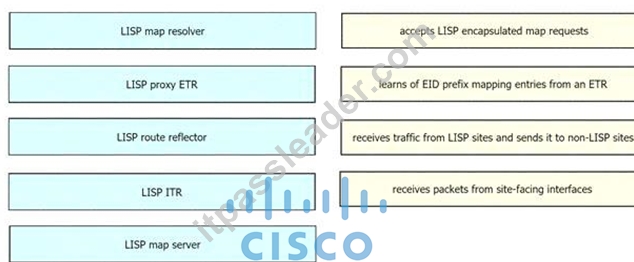
Answer:
Explanation: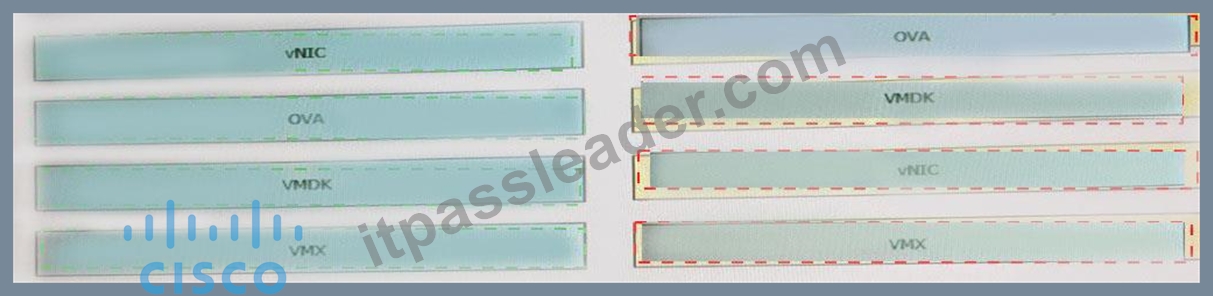
Explanation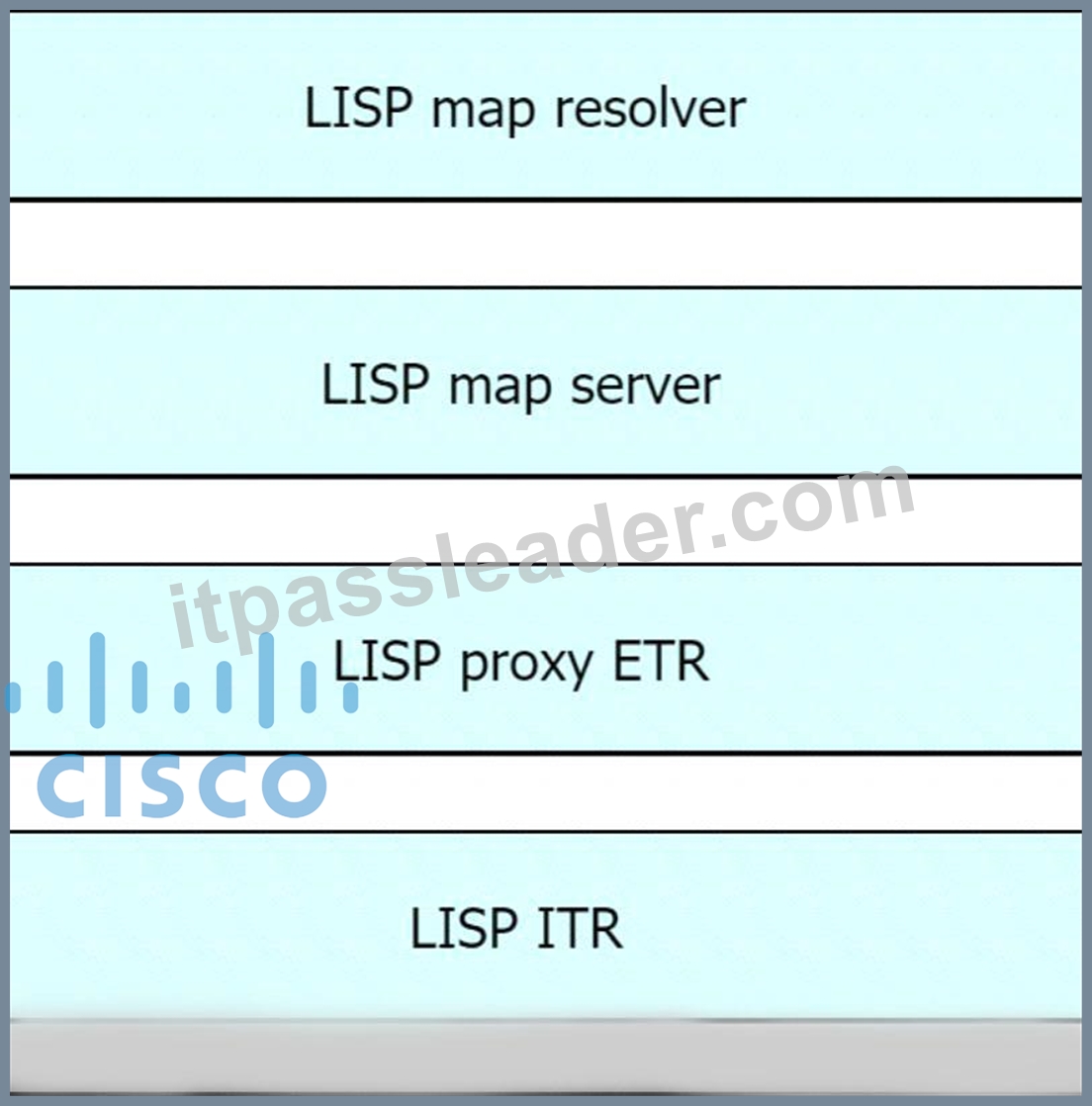
+ accepts LISP encapsulated map requests: LISP map resolver
+ learns of EID prefix mapping entries from an ETR: LISP map server
+ receives traffic from LISP sites and sends it to non-LISP sites: LISP proxy ETR
+ receives packets from site-facing interfaces: LISP ITR
Explanation
ITR is the function that maps the destination EID to a destination RLOC and then encapsulates the original packet with an additional header that has the source IP address of the ITR RLOC and the destination IP address of the RLOC of an Egress Tunnel Router (ETR).
After the encapsulation, the original packet become a LISP packet.
ETR is the function that receives LISP encapsulated packets, decapsulates them and forwards to its local EIDs. This function also requires EID-to-RLOC mappings so we need to point out an "map-server" IP address and the key (password) for authentication.
A LISP proxy ETR (PETR) implements ETR functions on behalf of non-LISP sites. A PETR is typically used when a LISP site needs to send traffic to non-LISP sites but the LISP site is connected through a service provider that does not accept no routable EIDs as packet sources. PETRs act just like ETRs but for EIDs that send traffic to destinations at non-LISP sites.
Map Server (MS) processes the registration of authentication keys and EID-to-RLOC mappings. ETRs sends periodic Map-Register messages to all its configured Map Servers.
Map Resolver (MR): a LISP component which accepts LISP Encapsulated Map Requests, typically from an ITR, quickly determines whether or not the destination IP address is part of the EID namespace
NEW QUESTION # 62
Drag and drop the virtual components from the left onto their deceptions on the right.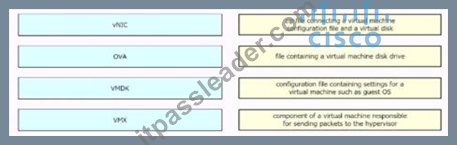
Answer:
Explanation: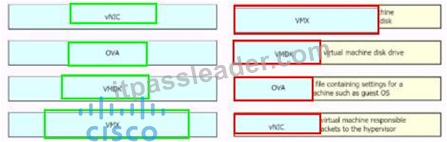
NEW QUESTION # 63 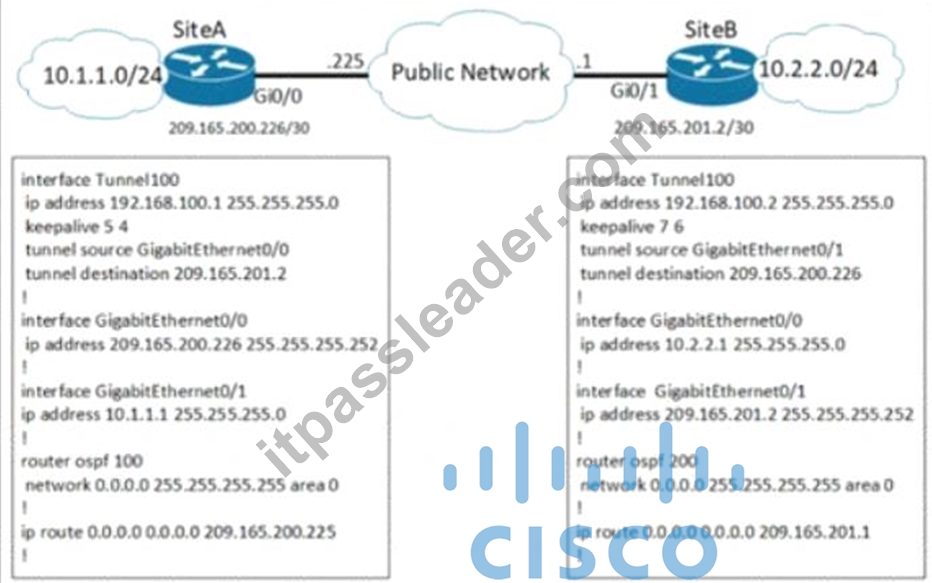
A network engineer configures a new GRE tunnel and enters the show run command. What does the output verify?
- A. The default MTU of the tunnel interface is 1500 byte.
- B. The tunnel will be established and work as expected
- C. The tunnel keepalive is configured incorrectly because they must match on both sites
- D. The tunnel destination will be known via the tunnel interface
Answer: D
NEW QUESTION # 64
Drag and drop the LISP components on the left to the correct description on the right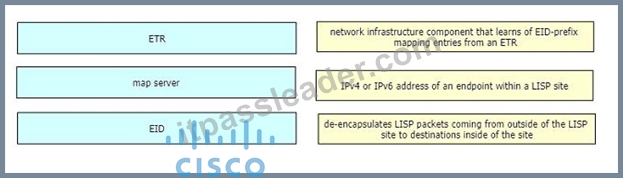
Answer:
Explanation: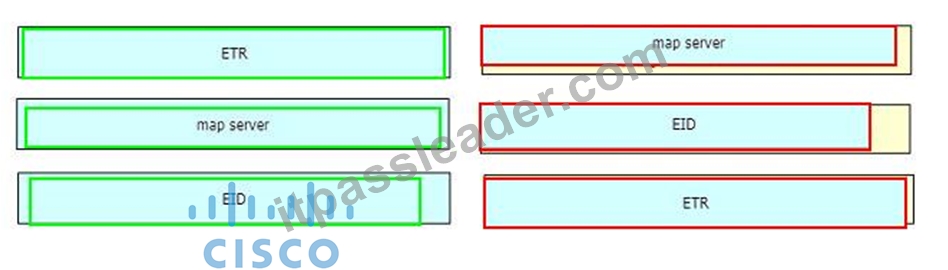
https://www.cisco.com/c/en/us/td/docs/ios-xml/ios/iproute_lisp/configuration/xe-3s/irl-xe-3s-book/irloverview.html#GUID-92481C7B-F44D-4D8C-8085-A2E98530CA50
NEW QUESTION # 65
Drag and drop the LIPS components on the left to the correct description on the right.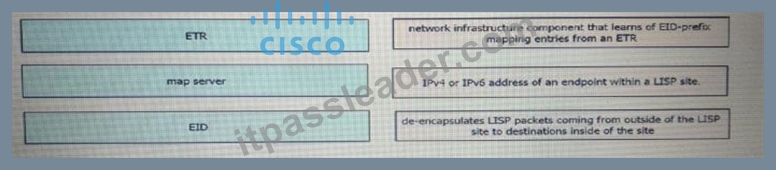
Map server
EID
ETR
Answer:
Explanation: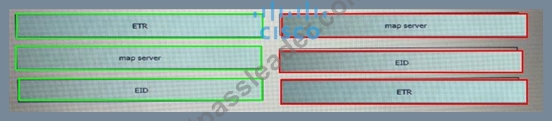
NEW QUESTION # 66
Refer to the Exhibit.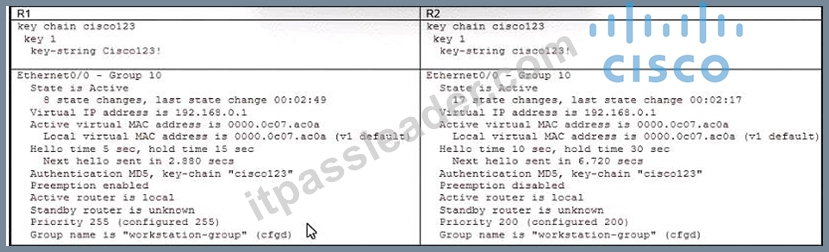
An engineer is installing a new pair of routers in a redundant configuration. When checking on the standby status of each router the engineer notices that the routers are not functioning as expected. Which action will resolve the configuration error?
- A. configure matching key-strings
- B. configure unique virtual IP addresses
- C. configure matching hold and delay timers
- D. configure matching priority values
Answer: A
Explanation:
In a redundant router configuration, it is crucial for routers to authenticate each other to ensure they are allowed to communicate and establish a standby relationship. Matching key-strings are used for authentication purposes. If the key-strings do not match, the routers will not trust each other, and the standby router will not take over when needed.
Reference:https://www.cisco.com/c/en/us/td/docs/switches/datacenter/nexus9000/sw/6-x/security/configuration/g
NEW QUESTION # 67
Which measure is used by an NTP server to indicate its closeness to the authoritative time source?
- A. hop count
- B. time zone
- C. stratum
- D. latency
Answer: C
NEW QUESTION # 68
Which technology does VXLAN use to provide segmentation for Layer 2 and Layer 3 traffic?
- A. bridge domain
- B. VLAN
- C. VNI
- D. VRF
Answer: C
Explanation:
Explanation
VXLAN has a 24-bit VXLAN network identifier (VNI), which allows for up to 16 million (= 224) VXLAN segments to coexist within the same infrastructure. This surely solve the small number of traditional VLANs.
NEW QUESTION # 69
Refer to the exhibit.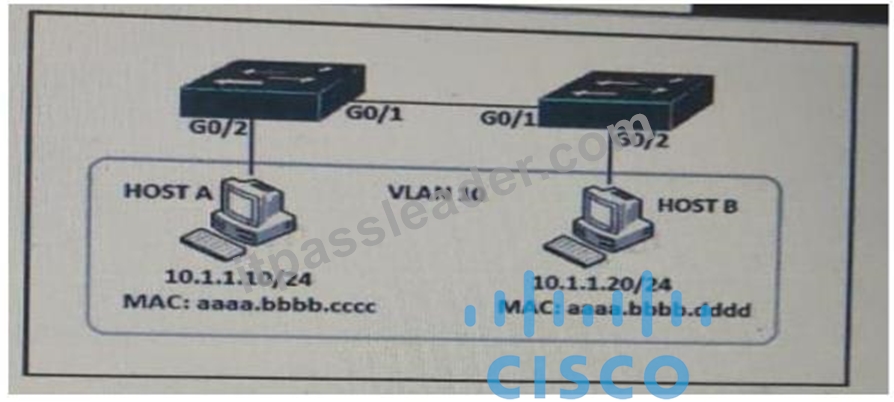
An engineer must deny HTTP traffic from host A to host V while allowing all other communication between the hosts, drag and drop the commands into the configuration to achieve these results.
Some commands may be used more than once.
Not all commands are used.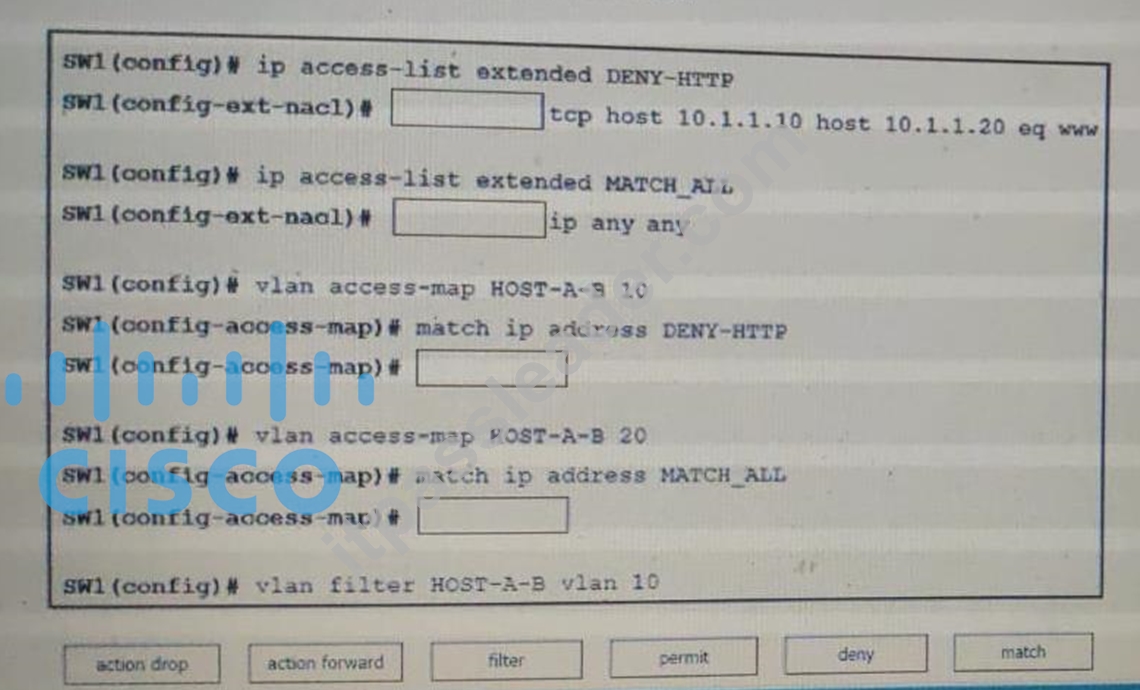
Answer:
Explanation:
Deny
Permit
Action drop
Action forward
NEW QUESTION # 70
What the role of a fusion in an SD-Access solution?
- A. acts as a DNS server
- B. performs route leaking between user-defined virtual networks and shared services
- C. provides connectivity to external networks
- D. provides additional forwarding capacity to the fabric
Answer: B
Explanation:
Today the Dynamic Network Architecture Software Defined Access (DNA-SDA) solution requires a fusion router to perform VRF route leaking between user VRFs and Shared-Services, which may be in the Global routing table (GRT) or another VRF. Shared Services may consist of DHCP, Domain Name System (DNS), Network Time Protocol (NTP), Wireless LAN Controller (WLC), Identity Services Engine (ISE), DNAC components which must be made available to other virtual networks (VN's) in the Campus.
Reference:
213525-sda-steps-to-configure-fusion-router.html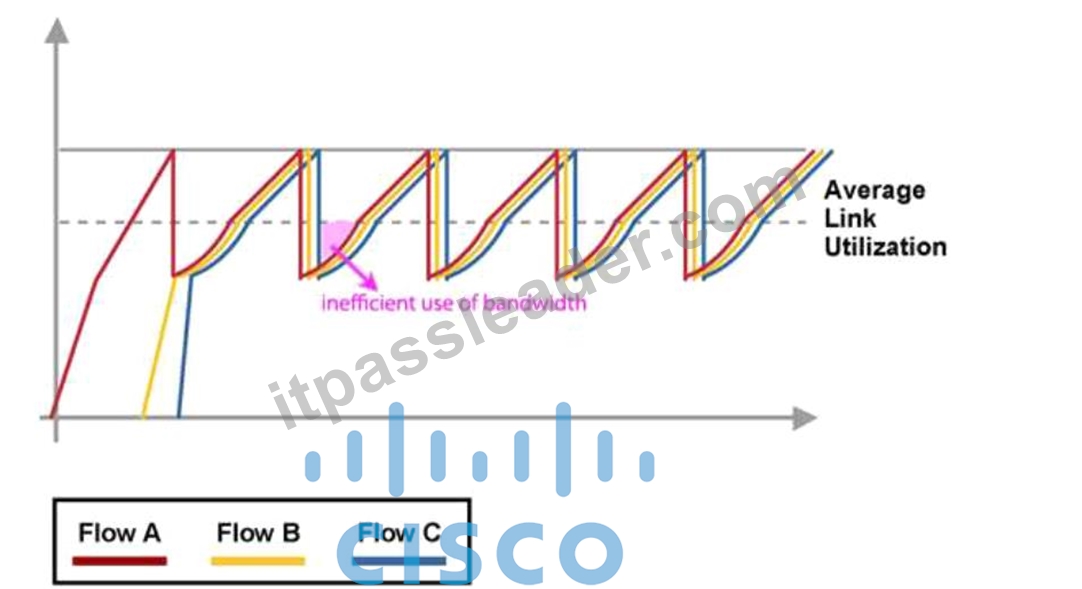
NEW QUESTION # 71
An engineer runs the sample code, and the terminal returns this output. Which change to the sample code corrects this issue?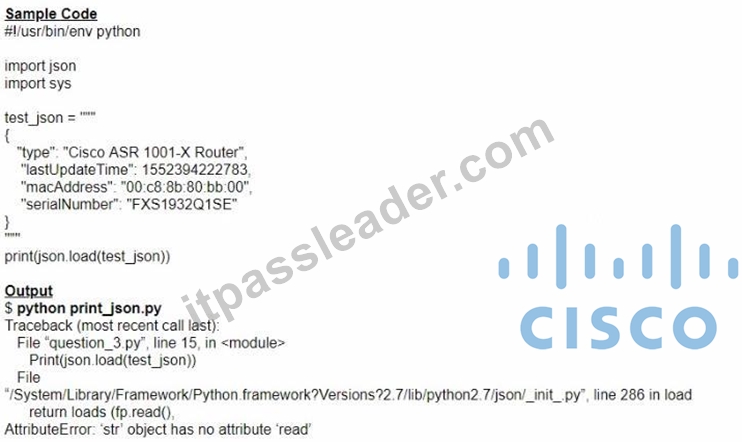
- A. Enclose null in the test_json string in double quotes
- B. Use a single set of double quotes and condense test_json to a single line
- C. Change the JSON method from load() to loads().
- D. Call the read() method explicitly on the test_json string
Answer: C
Explanation:
NEW QUESTION # 72
A network administrator applies the following configuration to an IOS device.
What is the process of password checks when a login attempt is made to the device?
- A. A TACACS+server is checked first. If that check fail, a database is checked?
- B. A TACACS+server is checked first. If that check fail, a RADIUS server is checked. If that check fail. a local database is checked.
- C. A local database is checked first. If that check fails, a TACACS+server is checked.
- D. A local database is checked first. If that fails, a TACACS+server is checked, if that check fails, a RADUIS server is checked.
Answer: B
Explanation:
The configuration lines provided indicate the use of AAA (Authentication, Authorization, and Accounting) with a default login authentication method list named "default". This list specifies the sequence of authentication methods to be queried during login attempts. The keyword 'group' followed by 'tacacs+' indicates that the device should first attempt to use TACACS+ for authentication. If TACACS+ servers are unreachable or unable to authenticate the user, the next method specified is 'radius', which means it will then attempt to use RADIUS for authentication. Finally, if both TACACS+ and RADIUS fail, 'local' indicates that the device should fall back on its local user database for authentication.
NEW QUESTION # 73
Refer to the exhibit. What is generated by the script?
- A. the routing table
- B. the router processes
- C. the running configuration
- D. the cdp neighbors
Answer: C
NEW QUESTION # 74
Refer to the exhibit.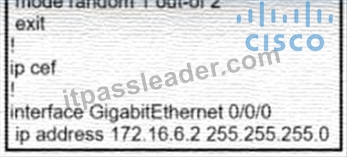
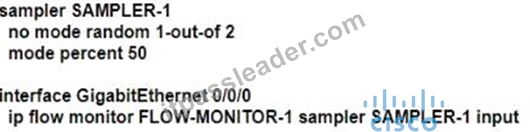
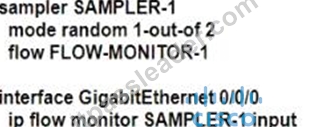
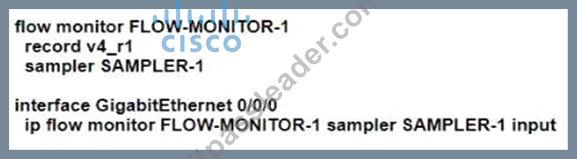
Which command set must be added to the configuration to analyze 50 packets out of every 100?
- A.
- B.
- C.
- D.

Answer: C
Explanation:
In the context of Cisco routers, to analyze a subset of packets, a sampling method is used. The correct command set to configure the router to sample 50 packets out of every 100 would involve setting up a flow sampler map that defines the rate at which packets are sampled. In this case, since we want to sample 50 out of every 100 packets, we need to specify a sampling rate where one out of every two packets is sampled. This can be achieved with the following configuration:
sampler SAMPLER-1
mode random 1-out-of-2
!
flow monitor FLOW-MONITOR-1
record netflow original-input
exporter EXPORTER-1
cache timeout active 60
sampler SAMPLER-1
!
interface GigabitEthernet0/0/0
ip flow monitor FLOW-MONITOR-1 input sampler SAMPLER-1
This configuration creates a sampler called "SAMPLER-1" that randomly selects one packet out of every two for analysis (which equates to analyzing 50% or 50 out of every 100 packets). The flow monitor
"FLOW-MONITOR-1" is then applied to an interface with the specified sampler.
NEW QUESTION # 75
Which two features are available only m next-generation firewalls? (Choose two)
- A. stateful inspection
- B. deep packet inspection
- C. virtual private network
- D. packet filtering
- E. application awareness
Answer: C,E
NEW QUESTION # 76
Refer to the exhibit.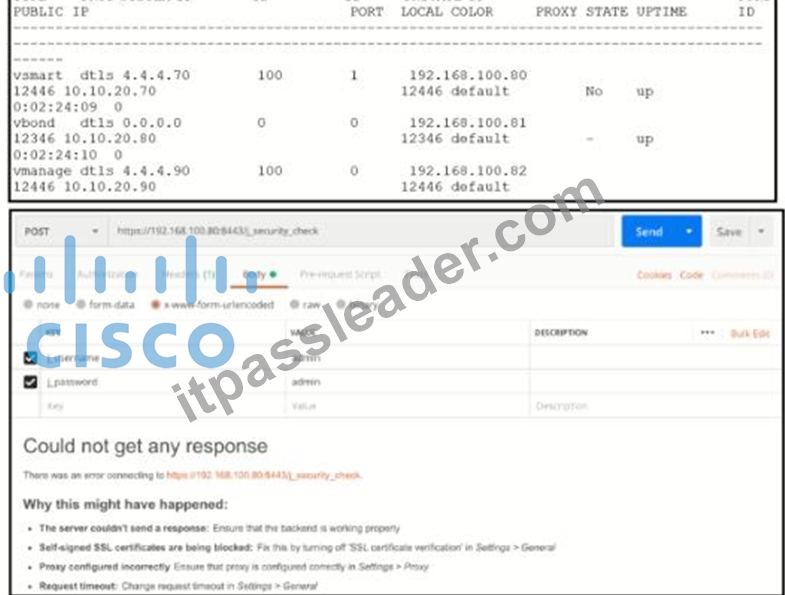
What step resolves the authentication issue?
- A. change the port to 12446
- B. use basic authentication
- C. restart the vsmart host
- D. target 192 168 100 82 in the URI
Answer: D
Explanation:
he first figure is the output of the "show control connections" command. From this figure we learned that the 192.168.100.82 so we need to connect to this IP address (not 192.168.100.80).
NEW QUESTION # 77
Refer to the exhibit. Both controllers are in the same mobility group. Which result occurs when client 1 roams between APs that are registered to different controllers in the same WLAN?
- A. CAPWAP tunnel is created between controller A and controller B.
- B. Client 1 contact controller B by using an EoIP tunnel.
- C. Client 1 users an EoIP tunnel to contact controller A.
- D. The client database entry moves from controller A to controller B.
Answer: A
NEW QUESTION # 78
What are two benefits of YANG? (Choose two.)
- A. It enables multiple leaf statements to exist within a leaf list.
- B. It enforces the use of a specific encoding format for NETCONF.
- C. It collects statistical constraint analysis information.
- D. It enforces configuration semantics.
- E. It enforces configuration constraints.
Answer: B,E
NEW QUESTION # 79
Refer to the exhibit.
Which statement about the OPSF debug output is true?
- A. The output displays OSPF hello and LSACK messages which router R1 has sent or received.
- B. The output displays all OSPF messages which router R1 has sent or received on all interfaces.
- C. The output displays OSPF hello messages which router R1 has sent received on interface Fa0/1.
- D. The output displays all OSPF messages which router R1 has sent to received on interface Fa0/1.
Answer: C
Explanation:
Explanation
This combination of commands is known as "Conditional debug" and will filter the debug output based on your conditions. Each condition added, will behave like an 'And' operator in Boolean logic. Some examples of the "debug ip ospf hello" are shown below:
NEW QUESTION # 80
Refer to the exhibit.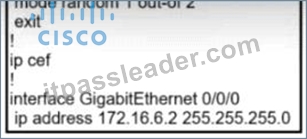
Which command set must be added to the configuration to analyze 50 packets out of every 100?
A)
B)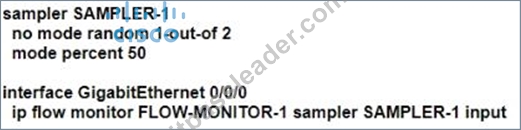
C)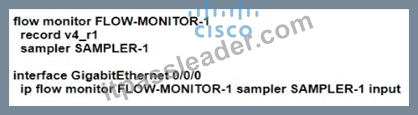
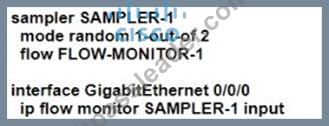
- A. Option B
- B. Option D
- C. Option C
- D. Option A
Answer: D
NEW QUESTION # 81
Which NTP mode must be activated when using a Cisco router as an NTP authoritative server?
- A. broadcast client
- B. server
- C. primary
- D. peer
Answer: B
Explanation:
Cisco routers and switches can use 3 different NTP modes:
NTP client mode.
NTP server mode.
NTP symmetric active mode.
The symmetric active mode is used between NTP devices to synchronize with each other, it's used as a backup mechanism when they are unable to reach the (external) NTP server.
The NTP server can operate in master mode to serve time using the local clock, when it has lost synchronization.
NEW QUESTION # 82
A network administrator has designed a network with two multilayer switches on the distribution layer, which act as default gateways for the end hosts.
Which two technologies allow every end host in a VLAN to use both gateways? (Choose two)
- A. HSRP
- B. MHSRP
- C. VRRP
- D. VSS
- E. GLBP
Answer: B,E
Explanation:
The only load balancing protocols are GLBP and MHSRP. Gateway Load Balancing Protocol (GLBP) provides gateway redundancy and load-balancing capability to a network segment. It provides redundancy with an active/standby gateway, and it provides load-balancing capability by ensuring that each member of the GLBP group takes care of forwarding the traffic to the appropriate gateway. Multiple HSRP (MSHRP) load share traffic by using multi hsrp.
NEW QUESTION # 83
Which action is performed by Link Management Protocol in a Cisco StackWise Virtual domain?
- A. It determines which switch becomes active or standby
- B. discovers the StackWise domain and brings up SVL interfaces.
- C. It determines if the hardware is compatible to form the StackWise Virtual domain
- D. It rejects any unidirectional link traffic forwarding
Answer: D
Explanation:
The Link Management Protocol (LMP) performs the following functions: + Verifies link integrity by establishing bidirectional traffic forwarding, and rejects any unidirectional links + Exchanges periodic hellos to monitor and maintain the health of the links + Negotiates the version of StackWise Virtual header between the switches StackWise Virtual link role resolution Reference: https://www.cisco.com/c/en/us/products/collateral/switches/catalyst-9000/nb-06-cat-9k-stack-wp-cte-en.html
NEW QUESTION # 84
......
350-401 [Aug-2025] Newly Released] 350-401 Exam Questions For You To Pass: https://exam-labs.itpassleader.com/Cisco/350-401-dumps-pass-exam.html